




What are the production process and characteristics of a silicone extruder?
Time:
2023-01-04
Silicone extrusion is one of the key processes in silicone molding and fabrication. Compared with other forming methods, compression molding offers the following advantages: the process is continuous and more efficient; it requires low capital investment and delivers rapid results. It can produce a wide range of products, including rubber hoses, sealing strips, rods, plastic sheets, and hollow components.
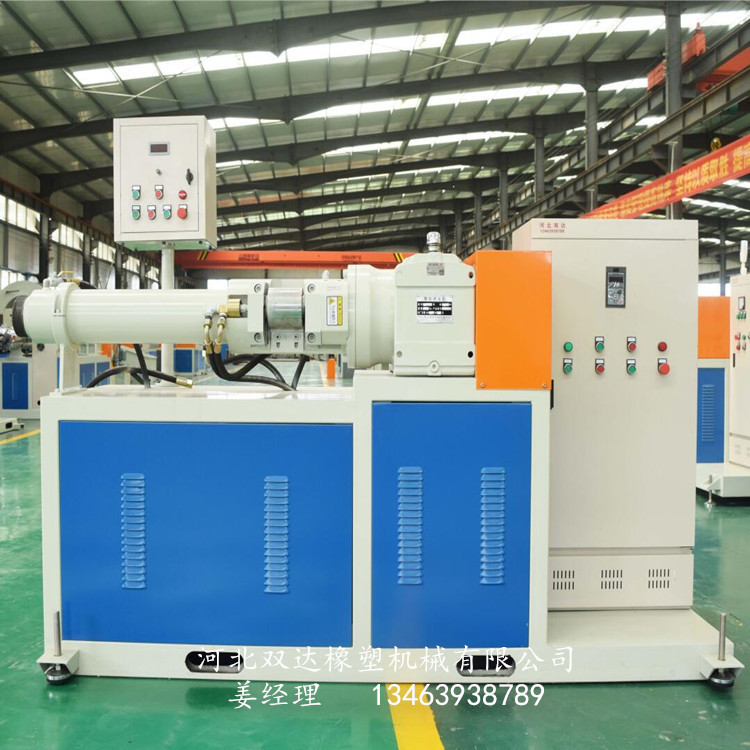
Silicone extruder What are the production process and characteristics?
Silicone extrusion is one of the key processes in silicone molding and fabrication. Compared with other forming techniques, compression molding offers the following advantages: the process is continuous and more efficient; it requires lower capital investment and delivers rapid results. It can produce a wide range of products, including rubber hoses, sealing strips, rods, plastic sheets, and hollow components.
Compression molding is primarily carried out in an extruder. To ensure the smooth progression of the entire forming process, a typical compression-molding machine generally consists of the following components.
1. Extrusion molding system: Primarily composed of a barrel and a screw, the silicone rubber is melted into a viscous liquid within the extrusion system and then uniformly and quantitatively extruded through the die by the screw.
2. Drive System: Provides the lead screw with the required torque and speed ratio.
3. Heating and Cooling System: Provides heating and cooling for the barrel, screw, and motor, ensuring that the extrusion process is carried out at the required ambient temperature.
4. Engine: Based on the extrusion molding system, silicone rubber products with specific geometric structures and specifications are produced.
5. Vulcanization equipment: Heat‑treat the silicone rubber to achieve vulcanization, yielding the finished product.
Silicone extruder Key points of the manufacturing process:
1. Screw speed: Excessively high screw speed can cause the silicone temperature to rise too much, leading to premature vulcanization and a sticky surface.
2. Engine operating pressure: The higher the engine’s operating pressure, the greater the total backflow and the lower the total forward flow, which can also result in excessive dry material remaining in the料筒; conversely, if the engine’s operating pressure is too low, it will be unable to extrude products of the desired specifications.
3. Material-feeding equipment: Silicone is typically fed at room temperature, so it does not affect extrusion moisture. The key is to ensure adequate and consistent feeding; otherwise, production costs may rise, and material shortages could occur.
Silicone extrusion characteristics:
1. The extrusion characteristics of silicone rubber are broadly similar to those of conventional rubbers; however, raw silicone rubber exhibits relatively low compressive strength, is highly sensitive to heat, and possesses significant adhesion, thereby posing certain challenges to the extrusion process.
2. Silicone extruder The diameter should be relatively large, and the air compression ratio should be somewhat higher. For silicone extrusion, the lead screw should feature constant‑pitch threads, and the feed end is preferably designed with a double‑thread configuration.
3. Silicone rubber is typically reinforced with precipitated silica, and both the extruder barrel and screw are manufactured from wear-resistant alloy steel. The thermal expansion coefficient of silicone rubber is generally quite low, around 1%.
4. Silicone extrusion typically employs either a dicumyl peroxide–accelerator system or a platinum catalyst. The dicumyl peroxide system is cost-effective and easy to formulate, while the platinum catalyst yields products with higher strength, excellent transparency, and reduced odor.
5. For extrusion‑type silicone, it is advisable to select liquid‑phase silicone; extruding paste‑type silicone readily generates air bubbles, and liquid‑phase silicone also offers superior light transmission and compressive strength.
Related news
Shuangda

Hebei Shuangda Rubber Machinery Co., Ltd.
Tel:400-0319-386
Landline:+86-319-6017632
Email:shuangdaxiangsu@126.com
Official website:www.shuangdajx.com
Addr:Liyuantun Industrial Zone, Weixian County, Xingtai City, Hebei Province
Copyright © 2022 Hebei Shuangda Rubber Machinery Co., Ltd.