




Introduction to the Extrusion Molding Process of Silicone Rubber Strips and Its Applications
Time:
2023-02-27
The extrusion molding process of a silicone strip extruder is also highly complex. Taking the production of tires with a silicone extruder as an example, during tire manufacturing at relatively low temperatures, the extrusion method is used to melt the silicone material, which is then forced through the die opening of the extruder head to form the desired shape. This is a challenging process that requires not only a thorough pre‑operation inspection of the extruder but also operators with substantial experience. Only by combining technical expertise with practical know-how can this process be executed effectively. Next, let’s explore the extrusion molding process and applications of silicone strip extruders. The extrusion molding technique employed by silicone strip extruders has relatively high technical requirements; however, it offers greater efficiency and helps reduce production costs, making it well worth widespread adoption across the industry. During operation, it is crucial to ensure that the extruder applies adequate pressure to the feed inlet to maintain stable product output. Accordingly, appropriate temperature‑control measures must be implemented—cooling the mold temperature is an effective approach. Additionally, since the rubber extruded from the die has not yet undergone vulcanization, it remains relatively soft and must be further cured in a vulcanization oven. After being extruded, silicone products pass through a pre‑heating vulcanization tunnel, where they are suspended in the air to achieve preliminary vulcanization and rapid curing.
The extrusion molding process of a silicone‑rubber extruder is highly complex. Taking the production of tires with a silicone‑rubber extruder as an example, during tire manufacturing, the extrusion method involves dissolving the silicone rubber at a controlled low temperature and then forcing it through the die opening of the extruder head to form the desired shape. This is a challenging procedure that requires not only a thorough pre‑operational inspection of the extruder but also operators with substantial experience. Only by combining technical expertise with practical know-how can this process be executed successfully. Below, we will explore an overview of the extrusion molding process for silicone‑rubber extruders, along with their applications.
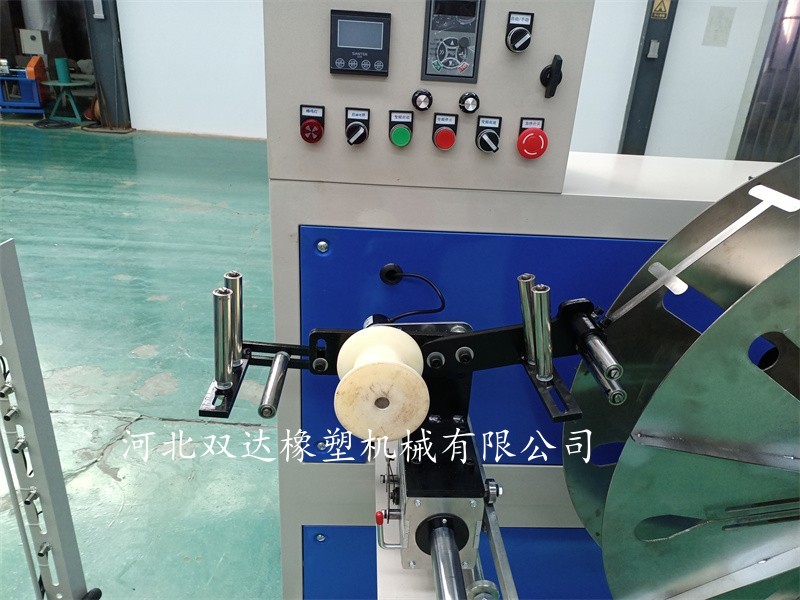
The extrusion molding method using a silicone‑rubber extruder has relatively high technical requirements, but it offers higher efficiency and helps reduce production costs, making it well suited for widespread adoption across the industry. During operation, it is essential to ensure that the extruder applies adequate pressure at the feed port to maintain stable product output; accordingly, appropriate temperature‑control measures must be implemented. Mold‑temperature cooling is an effective approach for managing thermal conditions. Additionally, rubber products formed by molding are relatively soft because they have not yet undergone vulcanization, so they must be cured in a vulcanization oven.
After extrusion, silicone products are suspended in the air within a pre‑curing tunnel at elevated temperatures, achieving preliminary vulcanization and rapid shaping. They then undergo thorough post‑curing in a secondary baking tunnel, resolving production issues that traditional silicone rubber extrusion‑vulcanization processes cannot address. Quality is consistently excellent: thin‑walled tubes exhibit perfect roundness with no deformation; large‑diameter and thick‑walled silicone tubes show no surface indentations; and complex‑sectional profiles—such as shaped silicone strips—are extruded and vulcanized with precise dimensions and aesthetically pleasing forms. The process delivers outstanding results across a wide range of hardnesses, from 30 to 70 Shore A, for both soft and rigid silicone rubbers. Both the inner and outer layers of the curing tunnel are constructed from stainless steel, providing superior insulation, extended heat‑retention, energy savings, and a clean, hygienic appearance—without contaminating the product. Specialized quartz heating elements enable efficient heat transfer through combined conduction and radiation, shortening vulcanization times while maximizing thermal efficiency. Once the tunnel reaches the set temperature, it automatically switches to constant‑temperature control and then shuts off, further reducing energy consumption. This equipment is suitable for manufacturing silicone tubes, strips, custom‑shaped profiles, foamed tubing, and more, offering short curing cycles, high productivity—with an hourly output of approximately 60–180 kg—and exceptionally user‑friendly operation.
Applications of Silicone Strip Extruders
1. Silicone strip extruders are widely used for the extrusion of silicone tubes, various sealing strips and seals, automotive tires, and composite silicone tubing, as well as for multi-layer co-extrusion of silicone tubes. Composite extrusion is an advanced technology in the rubber industry. Depending on the specific performance requirements of the product, different formulations and grades of rubber materials can be selected. With composite extrusion equipment, material consumption can be reduced while meeting a wide range of performance specifications.
2. Silicone strip extruders are also used in fields such as building construction, wire and cable manufacturing, and the automotive industry. In building construction, they are primarily employed for single‑layer roofing waterproofing membranes; in the wire and cable sector, they are used for service entrance cables in residential and commercial buildings, building power cables, mining cables, nuclear‑power‑station cables, automotive ignition wires, and control and signal cables. In the automotive industry, they are mainly applied to non‑tire components of passenger cars, trucks, and buses, including radiator and heater hoses, sealing strips, rubber belts, body and chassis parts, weatherstrips, floor mats, and tubing. 3. Silicone extruders are utilized in the LED industry for applications such as LED soft light strips, flexible light bars, LED sleeves, neon lights, and optical light bars.
4. Silicone strip extruders are used in the medical field for applications such as urinary catheters, drainage tubes, silicone peristaltic pump tubing, tracheal intubation tubes, medical feeding tubes, central venous catheters, and more.
5. Silicone strip extruders are also widely used in the infant products sector, including baby bottle straws, sterile medical-grade baby bottles, silicone teething toys, milk‑tea nipples, and silicone children’s toys.
Related news
Shuangda

Hebei Shuangda Rubber Machinery Co., Ltd.
Tel:400-0319-386
Landline:+86-319-6017632
Email:shuangdaxiangsu@126.com
Official website:www.shuangdajx.com
Addr:Liyuantun Industrial Zone, Weixian County, Xingtai City, Hebei Province
Copyright © 2022 Hebei Shuangda Rubber Machinery Co., Ltd.