




What functions does a plastic extruder have?
Time:
2021-05-17
Extrusion Molding The extrusion process proceeds as follows: granular or powdered solid materials are fed into the hopper of an extruder, where they are heated to a viscous‑flow state. Under pressure, the screw inside the barrel rotates, conveying the material forward. The molten material then passes through the die at the head, forming a parison that matches the shape of the die. Next, the parison enters a cooling and shaping unit, acquiring its final form. Finally, the product is cut to length for storage and transportation. The Role of Extrusion Molding in the Plastics Processing Industry 1. Extruded plastic products account for approximately 50% of total plastic production, while extrusion processes themselves comprise about 30% of all plastic molding output. 2. Virtually all thermoplastics, along with some thermosets, can be processed using extrusion equipment. 3. It enables continuous production, high efficiency, broad applicability, and versatile use of a single machine. Advantages of Extrusion Molding 1. Simple equipment requiring low capital investment. 2. Continuous production with high efficiency. 3. High degree of automation, resulting in reduced labor intensity. 4. Easy operation and straightforward process control. 5. Produces uniform, dense products of high quality. 6. Strong material adaptability—suitable for most thermoplastics and a limited range of thermosets. 7. Wide range of applications and multi‑purpose functionality. 8. Compact plant footprint and clean production environment.
Extrusion molding
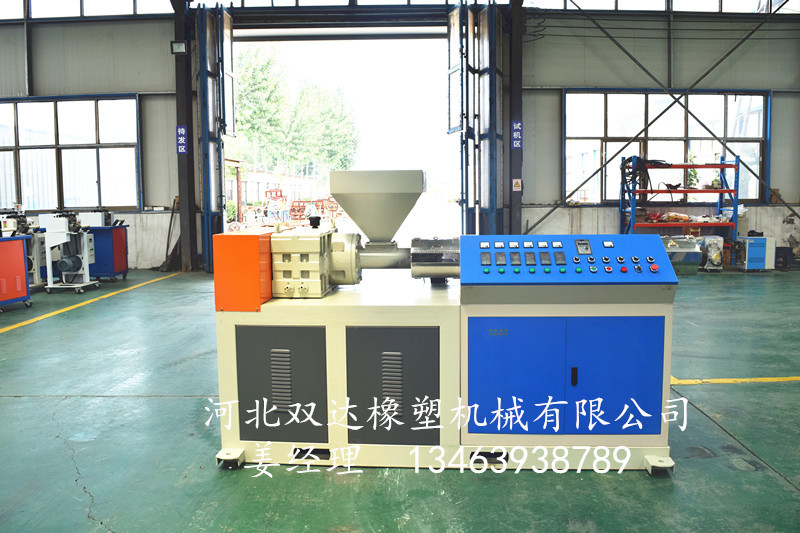
The extrusion process proceeds as follows: granular or powdered solid material is fed into the extruder hopper and heated until it reaches a viscous‑flow state. Under pressure, the screw in the barrel rotates, conveying the material forward. The molten material is then forced through the die at the die head, forming a parison that conforms to the die’s shape. The parison subsequently enters a cooling and shaping unit, where it attains its final form. Finally, the extrudate is cut to length for storage and transportation.
The Status of Extrusion Molding in the Plastics Molding Industry
1. Extruded plastic products account for approximately 50% of total plastic production, while extrusion accounts for about 30% of all plastic molding output.
2. Almost all thermoplastics and some thermosetting plastics can be molded using an extruder.
3. Continuous production, high efficiency, broad application scope, and multi‑functionality in a single machine
Advantages of Extrusion Molding
1. Simple equipment with low investment
2. Continuous production with high efficiency
3. The equipment features a high degree of automation and low labor intensity.
4. Production operations are simple, and process control is easy.
5. The extruded product is uniform, tightly sealed, and of high quality.
6. The material exhibits strong adaptability, accommodating most thermoplastic materials and a small number of thermosetting materials.
7. Wide range of applications; one device, multiple uses.
8. The production line occupies a small footprint and maintains a clean production environment.
Related news
Shuangda

Hebei Shuangda Rubber Machinery Co., Ltd.
Tel:400-0319-386
Landline:+86-319-6017632
Email:shuangdaxiangsu@126.com
Official website:www.shuangdajx.com
Addr:Liyuantun Industrial Zone, Weixian County, Xingtai City, Hebei Province
Copyright © 2022 Hebei Shuangda Rubber Machinery Co., Ltd.