




The basic operating principle of a plastic extruder
Time:
2021-05-05
The production line of a plastic extruder consists of the extruder (main machine), the die (die head), and the product‑forming and collection equipment (auxiliary machines). When processing plastic products using the extrusion process, the operating principle is as follows: one must select an extrusion line suitable for the type of raw material and the specifications of the final product. By precisely controlling process parameters such as temperature (heating and cooling), pressure, and screw speed, the plastic is continuously extruded along the production line. The extrusion process involves the extruder screw conveying and compacting the plastic, further melting it until it reaches a fully uniform plastified state. Under pressure, the molten material is forced through the die; after shaping by forming equipment and subsequent cooling, the desired finished product is obtained. Therefore, the plastic extruder is the key piece of equipment in extrusion, directly determining both the quality and output of the extruded products. A plastic extruder mainly comprises a screw, a barrel, a heating and cooling system, a drive system, and a control system. Among these components, the screw is the most critical functional element, responsible for conveying, compacting, plasticizing, homogenizing, pressurizing, and discharging the material throughout the extrusion process. In a typical single‑screw extruder, the screw is divided into three sections: the feeding section, the compression section, and the metering (homogenizing) section. The primary design parameters of the extruder screw include the screw diameter D, the length‑to‑diameter ratio L/D, and the compression ratio.
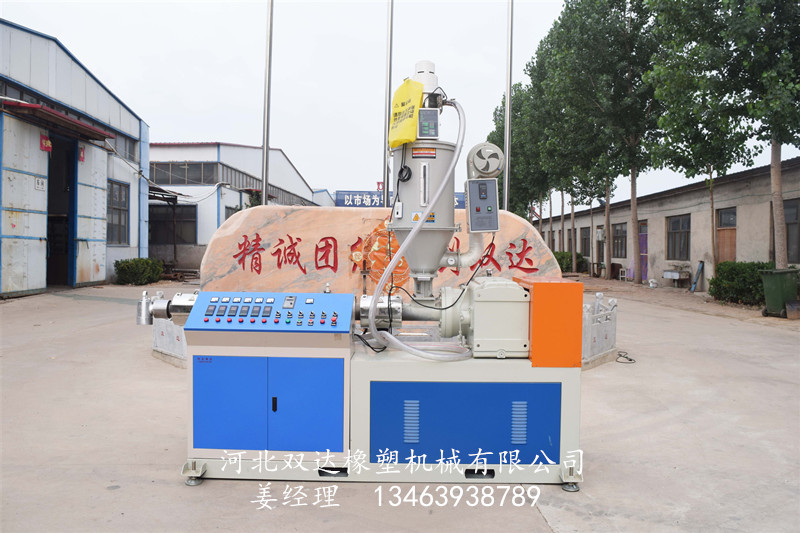
A plastic extrusion production line consists of an extruder (main machine), a die (die head), and equipment for product forming and collection (auxiliary machines).
The extrusion process for manufacturing plastic products operates as follows: an extrusion line suitable for the specific type of raw material and product specifications is selected, and by precisely controlling process parameters such as temperature (heating and cooling), pressure, and screw speed, the plastic product is continuously extruded along the production line.
The extrusion process of plastics relies on the extruder screw to convey and compact the material, further melting it until it reaches a fully uniform plasticized state. Under pressure, the molten plastic is then forced through a die, shaped by forming equipment, and cooled to produce the desired finished product. Consequently, the plastic extruder is a critical piece of equipment in plastic extrusion, directly determining both the quality and throughput of the extruded products.
Plastic extruders primarily consist of a screw, a barrel, heating and cooling systems, a drive system, and a control system. Among these components, the screw is the most critical functional element, responsible for key extrusion processes such as material conveyance, compaction, plasticization, homogenization, pressurization, and discharge. In a typical single-screw extruder, the screw is divided into three sections: the feeding section, the compression section, and the metering (homogenizing) section. The principal parameters of an extruder screw include the screw diameter D, the length-to-diameter ratio L/D, and the compression ratio.
Related news
Shuangda

Hebei Shuangda Rubber Machinery Co., Ltd.
Tel:400-0319-386
Landline:+86-319-6017632
Email:shuangdaxiangsu@126.com
Official website:www.shuangdajx.com
Addr:Liyuantun Industrial Zone, Weixian County, Xingtai City, Hebei Province
Copyright © 2022 Hebei Shuangda Rubber Machinery Co., Ltd.