




Extruder: Inspection Procedure for the Extruder
Time:
2021-05-08
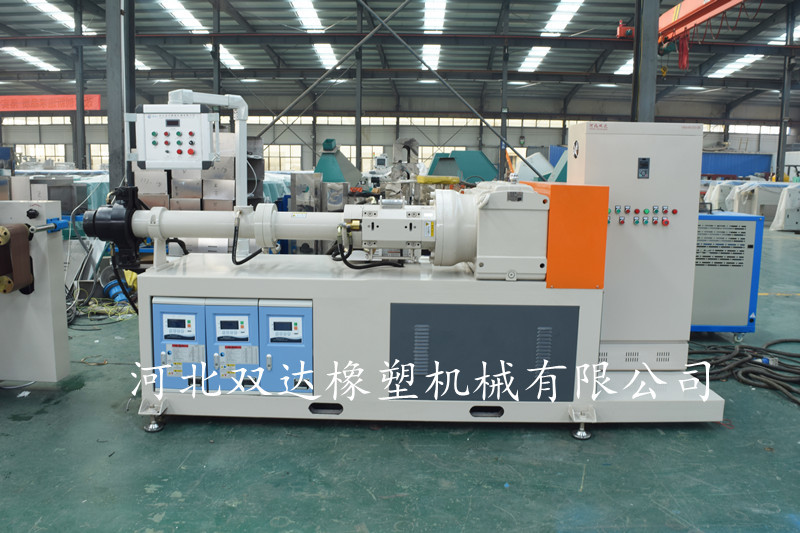
(1) Verify that all standard fasteners have been tightened. (2) Check that all lubrication points are adequately supplied with grease or lubricating oil. (3) For oil reservoirs or gearboxes, first clean them thoroughly and inspect for any foreign debris, metal shavings, or other contaminants that may have fallen into the reservoir or housing. Then, add the specified type and quantity of lubricant to the reservoir or housing. (4) When using a gasoline pump for forced lubrication in the extruder’s drive system, verify that the pump’s rotation direction complies with the required specifications and that the oil pressure and circulation are satisfactory. (5) Confirm that the rotation directions of both the main motor and the mechanical pump motor are correct. (6) Ensure that the tension levels of all V-belts are uniform. (7) Check that the clutch adjustment nut is properly positioned and that the clutch engages and disengages smoothly and reliably. If a pneumatic clutch is used, verify that the air valve’s standard air pressure, air supply volume, and the relief pressure set by the pressure regulator all meet the required specifications. (8) Inspect the water pipes, gas valves, and vacuum system for proper sealing, and ensure that the gate valves open and close smoothly and reliably. (9) Verify that the electrical grounding of all equipment is in good condition.
 (1) Verify that all standard components have been tightened.
(2) Verify that all lubrication points have been adequately supplied with grease or lubricating oil.
(3) For oil sumps or gearboxes, first carry out cleaning and inspect for any foreign matter, metal filings, or other debris that may have fallen into the sump or housing. Then, introduce the specified type and quantity of lubricant into the sump or housing.
(4) When using a gasoline pump for forced lubrication in the extruder’s drive system, verify that the pump’s rotation direction complies with the specified requirements and that the oil pressure and circulation are adequate.
(5) Verify that the rotation directions of the main motor and the mechanical pump motor are correct.
(6) Check whether the tension levels of all V-belts are consistent.
(7) Verify that the adjusting nut of the clutch is properly positioned and that the clutch’s engagement and disengagement, as well as its control, operate smoothly. If a pneumatic clutch is used, check the air‑supply pressure, the air‑supply flow rate, and ensure that the pressure set by the pressure‑regulating valve meets the specified requirements.
(8) Verify that the water pipes, gas valves, and vacuum system are in good sealing condition, and that the gate valves operate smoothly and reliably.
(9) Verify that the grounding systems of all machinery and electrical equipment are in good condition.
Related news
Shuangda

Hebei Shuangda Rubber Machinery Co., Ltd.
Tel:400-0319-386
Landline:+86-319-6017632
Email:shuangdaxiangsu@126.com
Official website:www.shuangdajx.com
Addr:Liyuantun Industrial Zone, Weixian County, Xingtai City, Hebei Province
Copyright © 2022 Hebei Shuangda Rubber Machinery Co., Ltd.