




What are the production processes and characteristics of silicone extruders?
Time:
2021-05-22
Extrusion is one of the key methods for shaping silicone rubber. Compared with other forming techniques, extrusion offers the following advantages: it provides a continuous production process with higher efficiency, requires lower investment, and delivers quicker returns. It can produce various products such as hoses, strips, rods, sheets, and hollow components. Extrusion molding is primarily carried out on an extruder. To ensure the molding process proceeds smoothly, an extrusion system typically consists of the following components: 1) Extrusion System: Comprised mainly of the barrel and screw, this system plasticizes the silicone rubber into a viscous flow, which is continuously and precisely extruded through the die by the screw under controlled pressure and rate. 2) Drive System: Supplies the necessary torque and rotational speed to the screw. 3) Heating and Cooling System: Heats and cools the barrel, screw, and die to maintain the extrusion process within the desired temperature range. 4) Die: Shapes the silicone rubber into products with specific geometries and dimensions. 5) Curing Unit: Heats and cures the silicone rubber to produce the final product. Key considerations in extrusion processing include: 1) Screw Speed: Excessive screw speed can lead to overheating of the silicone rubber, causing premature vulcanization and a sticky surface. 2) Die Pressure: Higher die pressure increases backflow while reducing forward flow, potentially resulting in excess material buildup in the barrel; too low a die pressure may prevent the production of correctly sized parts. 3) Feeding Mechanism: Silicone rubber is generally fed cold, so its impact on extrusion temperature is minimal. However, adequate free feeding is crucial; insufficient feeding reduces production efficiency and may cause material shortages. Characteristics of silicone rubber extrusion: 1) The extrudability of silicone rubber is broadly similar to that of conventional rubbers. However, due to its lower green strength, thermal sensitivity, and pronounced stickiness, silicone rubber presents certain challenges during extrusion. 2) For silicone rubber extrusion, a relatively long L/D ratio and a slightly higher compression ratio are recommended. The screw should feature uniform pitch, with a double‑thread design at the discharge end. 3) Silicone rubber is commonly reinforced with precipitated silica. Both the barrel and screw of the extruder should be made from wear‑resistant alloy steel. The expansion rate of extruded silicone rubber is typically low, around 1%. 4) Two‑component peroxide curing systems and platinum catalysts are commonly used. Peroxide systems are cost‑effective and offer good dimensional control, whereas platinum catalysts yield products with higher strength, better transparency, and reduced odor. 5) Gas-phase silica is preferred for extrusion, as precipitated silica tends to form bubbles during the process. Additionally, gas-phase silica provides superior transparency and mechanical strength.
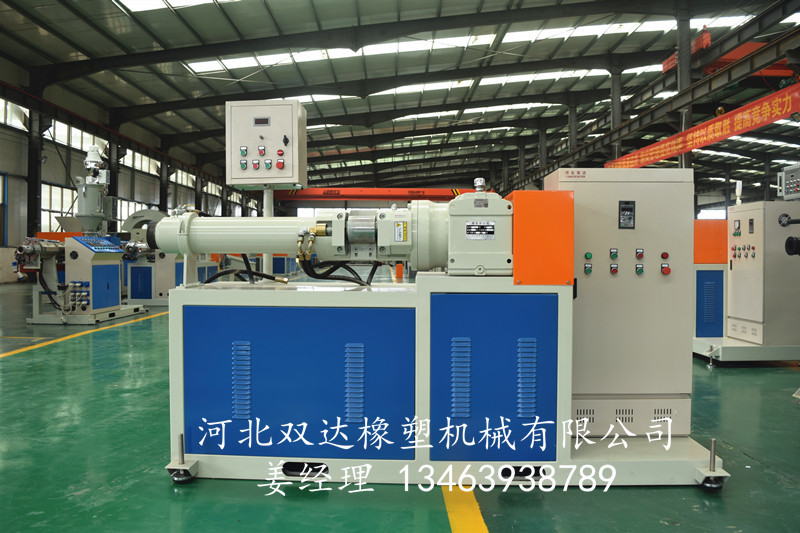 Extrusion is one of the key processes in silicone molding. Compared with other forming methods, extrusion offers the following advantages: it enables a continuous production process with higher efficiency; requires lower capital investment and delivers quicker returns; and can produce a wide range of products, including hoses, strips, rods, sheets, and hollow articles.
Extrusion molding is primarily carried out on an extruder. To enable the molding process, an extrusion molding machine typically consists of the following components.
1) Extrusion system: Primarily composed of a barrel and a screw, the silicone rubber is plasticized into a viscous melt within the extrusion system and continuously extruded from the die at a constant pressure and flow rate by the screw.
2) Drive system: Provides the screw with the required torque and rotational speed.
3) Heating and cooling system: Provides heating and cooling to the barrel, screw, die head, and other components, ensuring that the extrusion process operates within the desired temperature range.
4) Die head: Through the extrusion system, silicone rubber products of a specific geometry and dimensions are produced.
5) Vulcanization Unit: Heats and vulcanizes the silica gel to produce the final product.
Key points of the extrusion process:
1) Screw speed: Excessive screw speed can cause the silicone rubber to overheat, leading to premature vulcanization and a sticky surface.
2) Die head pressure: The higher the die head pressure, the greater the backflow and the smaller the forward flow, which can result in an excessive amount of raw material in the barrel; if the die head pressure is too low, it will be impossible to extrude products of the desired dimensions.
3) Feeding System: Silicone is typically fed cold, so it has little impact on extrusion temperature. The key is to ensure an adequate supply of free-flowing material; otherwise, production efficiency will decline and material shortages may occur.
Characteristics of silicone extrusion:
1) The extrusion performance of silicone rubber is broadly similar to that of general-purpose rubbers; however, raw silicone rubber exhibits relatively low tensile strength, is highly sensitive to heat, and possesses pronounced stickiness, thereby posing certain challenges to the extrusion process.
2) For silicone rubber extruders, a high length-to-diameter ratio is recommended, and the compression ratio should be somewhat higher. The screw used for silicone rubber extrusion should feature uniform pitch threads, with a double‑thread design at the discharge end.
3) Silicone rubber is typically reinforced with precipitated silica, and both the extruder barrel and screw are manufactured from wear-resistant alloy steel. The extrusion swell of silicone rubber is generally small, around 1%.
4) Silicone extrusion typically employs either a dicumyl peroxide–accelerator system or a platinum catalyst. The dicumyl peroxide system is more cost‑effective and offers easier dimensional control, while the platinum catalyst yields products with higher strength, superior transparency, and reduced odor.
5) For extruding silicone rubber, it is advisable to use vapor-phase silica gel; precipitated silica gel tends to form bubbles during extrusion, and vapor-phase silica gel also offers superior transparency and mechanical strength.
Related news
Shuangda

Hebei Shuangda Rubber Machinery Co., Ltd.
Tel:400-0319-386
Landline:+86-319-6017632
Email:shuangdaxiangsu@126.com
Official website:www.shuangdajx.com
Addr:Liyuantun Industrial Zone, Weixian County, Xingtai City, Hebei Province
Copyright © 2022 Hebei Shuangda Rubber Machinery Co., Ltd.