




Extrusion Production Process for Silicone Tubing Equipment
Time:
2021-05-19
The selection of production equipment for silicone tubing depends on the type of tube being manufactured. Silicone tubes are typically formed by extrusion using a silicone extruder; however, since there are various types of silicone tubing, the auxiliary forming equipment required also differs. The most common type is the single‑layer straight silicone tube, which has a relatively simple manufacturing process that mainly involves a silicone extruder and a vulcanization unit. The extruder is designed to suit the specific properties of silicone—generally featuring a short L/D ratio for the screw to minimize energy consumption and facilitate molding. When producing single‑layer silicone tubes, the extruder is usually elevated and fitted with a T‑die, allowing the extruded tube to be formed vertically downward. The extruded tube then passes directly into a vulcanization unit positioned beneath the die. By adjusting the extruder’s output speed, we can synchronize vulcanization with the extrusion process. This method yields tubes with smooth, scratch‑free surfaces, improving yield and making it highly favored by customers. Silicone products are readily vulcanizable; accordingly, we select the length of the vulcanization equipment based on the size of the extruded product. For larger items, we often replace the vertical vulcanization section with a high‑temperature shaping stage, followed by a second pass through a vulcanization chamber. Ultimately, the choice of specific production equipment for silicone tubing depends on the particular requirements of each application. There are many varieties of silicone tubing. In addition to single‑layer straight tubes, there are profiled tubes and specialized single‑layer profiles, which are typically shaped using molds after extrusion. These profiled tubes are then placed in a vulcanization oven for curing. Other types are composite silicone tubes, whose manufacturing processes are more complex and require careful consideration of the product’s structure to determine the appropriate equipment and production methods. For instance, some composite tubes are produced via co‑extrusion using a dual‑die configuration, followed by vulcanization. However, certain tubes feature an intermediate layer; these necessitate two separate silicone extruders operating in-line during production. Such multi‑layer tubes are usually cured in a vulcanization tank, a pressure‑assisted process known as “pressurized vulcanization.” The choice of vulcanization method should be guided by the product’s formulation and structural design.
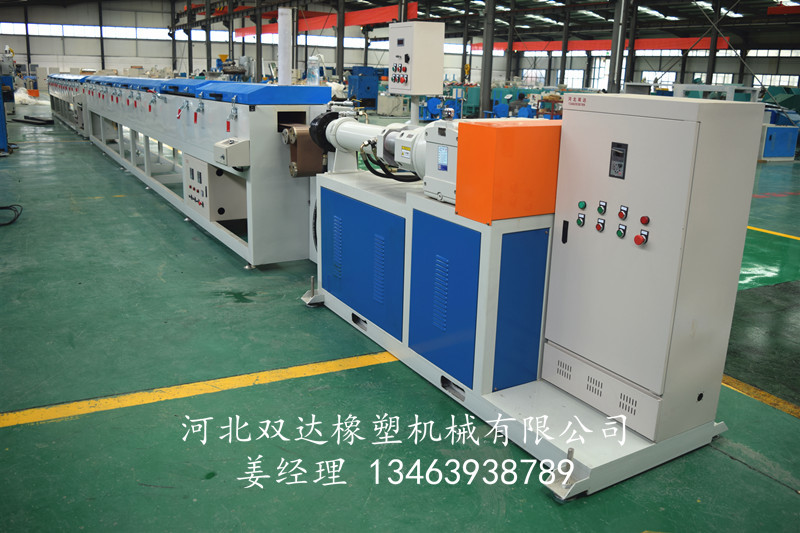 The choice of production equipment for silicone tubing depends on the type of tube being manufactured. Silicone tubes are typically formed by extrusion using a silicone extruder; however, since there are various types of silicone tubing, the auxiliary forming equipment required also differs. The most common type is the single‑layer straight silicone tube, which has a relatively simple production process that mainly involves a silicone extruder and a vulcanization unit. The extruder is designed to accommodate the specific properties of silicone—its screw length-to-diameter ratio is generally short, which helps reduce energy consumption and facilitates molding. When producing single‑layer silicone tubes, the extruder is usually elevated and fitted with a T‑die, allowing the extruded tube to be formed vertically downward. The extruded tube then passes directly into a vulcanization unit positioned beneath the die. By adjusting the extruder’s output speed, we can synchronize vulcanization with the production line. This process yields tubes with smooth, scratch‑free surfaces, improving yield and making it highly favored by customers. Silicone products are readily vulcanizable; we select the length of the vulcanization unit based on the size of the extruded part. For larger components, we often replace the vertical vulcanization section with a high‑temperature shaping stage, followed by a second pass through a vulcanization oven. Ultimately, the appropriate production equipment for silicone tubing should be chosen according to the specific requirements of each product.

There are many types of silicone tubing. In addition to single‑layer straight tubing, there is also profiled tubing. Profiled single‑layer tubing is typically formed using molds after extrusion, and the resulting tube—often with an internal mandrel—is then placed in a vulcanization oven for curing. Some silicone tubes are composite hoses, whose manufacturing processes are more complex. The specific equipment and production methods employed depend on the product’s structure. For example, certain composite silicone tubes are produced by co‑extruding with a dual‑die head followed by vulcanization. Other tubes feature an intermediate layer; these require two silicone extruders operating in-line during production. As a rule, such layered silicone tubes are cured in a vulcanization tank, a process known as pressurized vulcanization because it involves applying pressure during curing. The choice of vulcanization method for silicone tubing should be determined by the formulation and structural design of the product.
Related news
Shuangda

Hebei Shuangda Rubber Machinery Co., Ltd.
Tel:400-0319-386
Landline:+86-319-6017632
Email:shuangdaxiangsu@126.com
Official website:www.shuangdajx.com
Addr:Liyuantun Industrial Zone, Weixian County, Xingtai City, Hebei Province
Copyright © 2022 Hebei Shuangda Rubber Machinery Co., Ltd.