




Butyl Rubber Dual-Wrist Feed Extrusion Line
Time:
2021-07-13
Today, cold-feed rubber extruders are widely used for extrusion molding, with many rubber products manufactured using this technology. Common types of rubber products include EPDM (ethylene propylene diene monomer) rubber, silicone rubber, and natural rubber. During extrusion, these materials are typically fed into the extruder via a forced‑feed roller system, which pushes the compound into the screw barrel; only then can it be shaped at the die head. However, certain rubbers—such as butyl rubber—are notably soft and highly adhesive. Conventional feeding methods can easily cause the rubber sheet to break during extrusion, preventing continuous material feed. To address this issue, we have developed a dual‑arm feeding extruder, which is particularly suited for producing butyl rubber products. This machine employs a dual‑arm, interlocking feeding mechanism to forcibly convey the soft butyl rubber into the screw barrel, making it an ideal solution for butyl rubber processing. A typical example is automotive vibration dampers, which are produced using a dual‑arm‑fed butyl rubber extruder. Since different rubber grades exhibit distinct properties, selecting the appropriate extruder based on your product’s characteristics is essential to achieving optimal results.
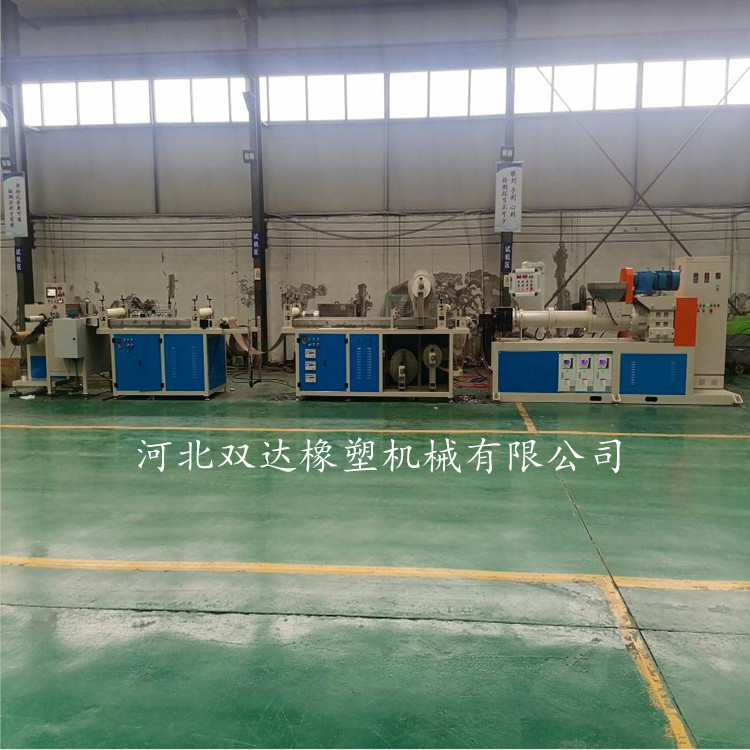 Today, cold-feed rubber extruders are widely used for extrusion molding, and many rubber products are manufactured using this type of equipment. Common types of rubber products include: EPDM Products made from EPDM rubber, silicone rubber, and natural rubber all rely on a forced‑feed roller system during extrusion to ensure continuous material delivery. The rubber is fed through the feed block into the extruder’s screw barrel, where it is processed before being extruded and shaped at the die head. However, certain rubbers—such as butyl rubber—are notably soft and highly adhesive. With conventional feeding methods, this can easily cause the rubber sheet to break during extrusion, preventing uninterrupted material supply. To address this, we have developed a dual‑arm feeding extruder, which is particularly well suited for producing butyl rubber products. During operation, this machine employs a dual‑arm, interlocking feeding mechanism to forcibly feed the soft butyl rubber into the screw barrel, a method that is ideally tailored to butyl rubber processing. Common automotive damping components are typically manufactured using such dual‑arm‑fed butyl rubber extruders. Given the varying properties of different rubber types, it is essential to select an extruder that matches the specific characteristics of your product in order to achieve optimal results.
Related news
Shuangda

Hebei Shuangda Rubber Machinery Co., Ltd.
Tel:400-0319-386
Landline:+86-319-6017632
Email:shuangdaxiangsu@126.com
Official website:www.shuangdajx.com
Addr:Liyuantun Industrial Zone, Weixian County, Xingtai City, Hebei Province
Copyright © 2022 Hebei Shuangda Rubber Machinery Co., Ltd.