



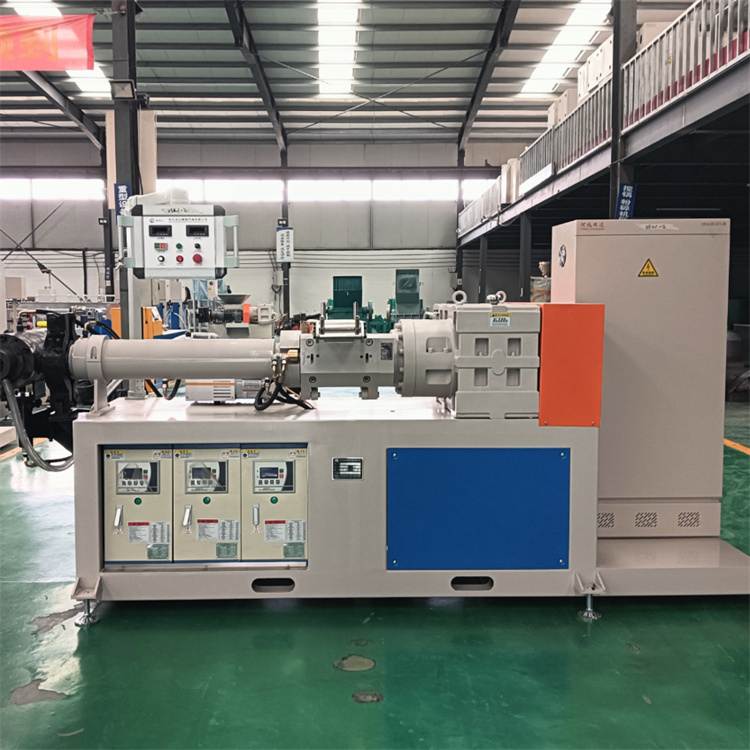
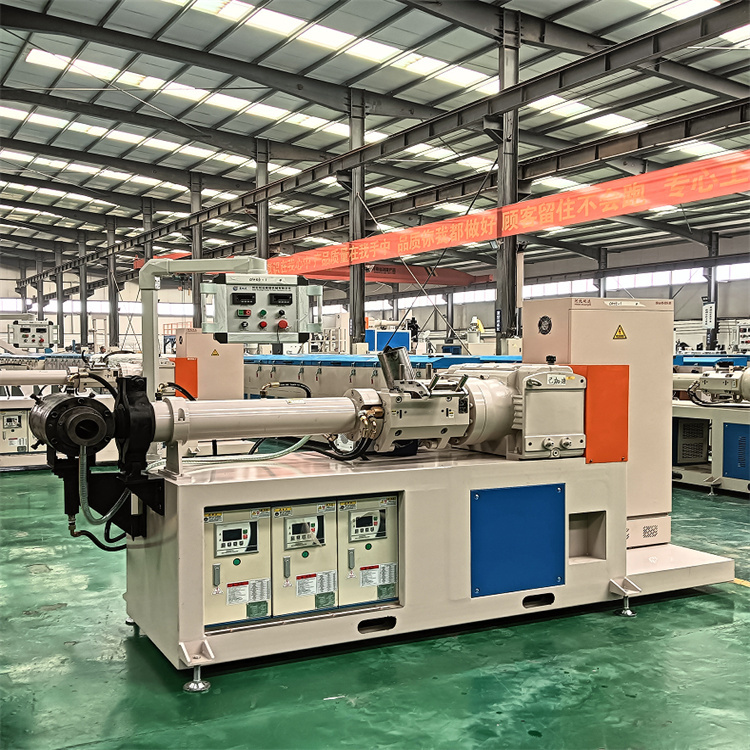
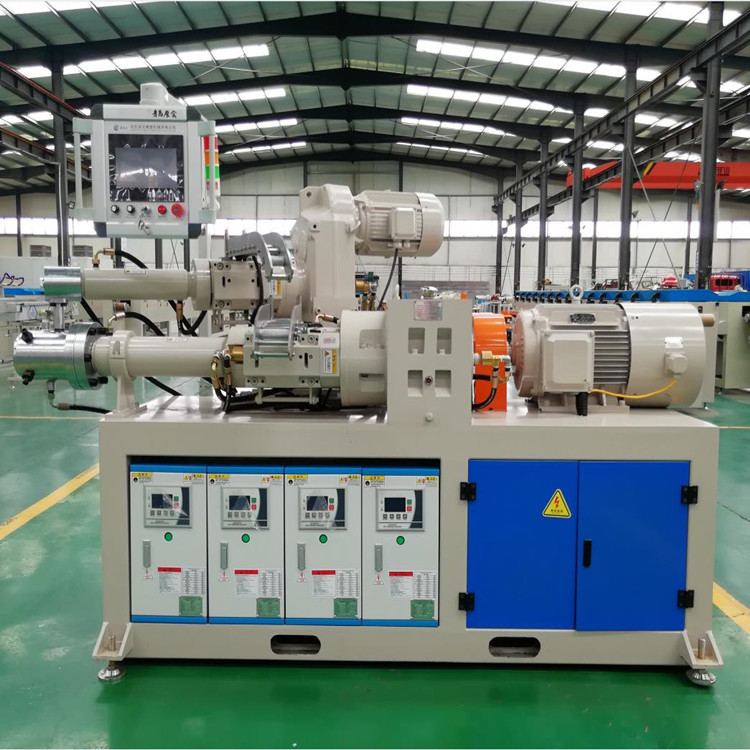
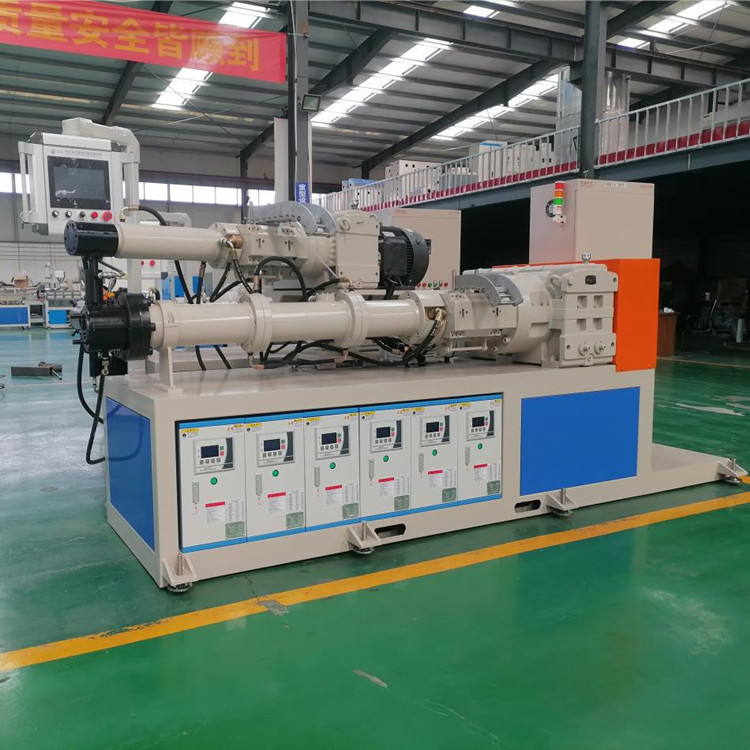
90 rubber strip extruder
Description
- Product Description
-
Model number
XJ-75
XJ-90
XJ-120
XJ-150
Screw diameter mm
75
90
120
150
Length-to-diameter ratio
20:1
20:1
20:1
20:1
Motor power kW
30
55
110
132
Screw rotational speed r/min
30-65
30-60
30-50
30-50
Production rate kg/h
80-180
100-300
180-540
500-750
Purpose
Suitable for extruding a wide range of rubber compounds—including EPDM, natural rubber, nitrile rubber, butyl rubber, and reclaimed rubber—this equipment is ideal for producing composite sealing strips for architectural doors and windows, single‑extruded sealing strips, as well as various dense and foamed rubber products in strip, rod, tube, and sheet forms for applications in construction, electrical appliances, machinery, water conservancy, and other industries.
Work stage
The process is divided into four stages: In the first stage, the machine must feed, convey, and compact the compounded rubber; in the second stage, the compound must be heated and plasticized to become a more flowable mass; in the third stage, the extruder must mix and thermally homogenize the compounded rubber; and in the fourth stage, pressure must be built up to force the compounded rubber through the die. For hot-feed extruders, the second and third stages are provided by a preheated open mill.
Operation and Maintenance of Cold-Feed Extrusion Equipment
1. Before use, the hardened‑tooth‑surface reducer must be filled with 25–30 kg of oil (refer to the oil dipstick). In summer, use gear oil; in winter, use No. 45 mechanical oil. Regular oil changes will help extend the service life of the reducer.
2. The fixed cover of the cold-feed system should be opened regularly, once every 1–2 months, to perform routine maintenance on the feed mechanism and adjust the clearance between the copper knife and the feed roller; otherwise, glue leakage may occur. Additionally, grease (lithium-based) should be applied to the cold-feed gears once per shift.
3. Before powering on, calibrate the bore gauge and tighten the flange and all fasteners.
4. The operating temperature range is 40°C to 70°C; temperatures that are too low can damage the machine, while excessively high temperatures may cause rubber vulcanization (scorching), resulting in equipment failure and impaired operation.
5. Before shutting down, ensure that all material has been completely extruded from the barrel and screw, and cool the barrel and screw to ambient temperature using circulating water; otherwise, this may affect subsequent use.
6. Winter-use precautions: Before freezing temperatures set in, antifreeze must be added to the circulating water to prevent ice formation and potential damage to the equipment.
Key words:- 90
- 喂料
- 必须
- 20
- 使用
- 温度
- 螺杆
- 工作
- 挤出
- 机器
FAQs
What are the main types of plastic extruders?
How does temperature control work for rubber extruders and how to optimize it?
What are the features of cold‑feed rubber extruder?
What are the advantages of pin‑barrel cold‑feed rubber extruder?
Can one extruder process both rubber and silicone compounds?
Can you provide custom‑built extrusion equipment and turn‑key solutions?
90 rubber strip extruder
OUR SERVICE
We offers a wealth of product support resources, including a range of technical and downloadable product manuals to product certifications.
Products VideosRelated Products
Hebei Shuangda Rubber Machinery Co., Ltd. Specializing in the production of rubber, silicone,
plastic extrusion machinery complete sets of equipment.
Website

Shuangda Rubber Machinery
Tel:+86-319-6017632
After-sales: +86-19831968789
Email:shuangdaxiangsu@126.com
Website:www.shuangdajx.com
Address:Liyuantun Industrial Zone, Weixian County, Xingtai City, Hebei Province, China