




The working principle of rubber hoses
Time:
2025-08-01
The operating principle of rubber hoses is primarily based on their elastic deformation capability and sealing‑conduction properties. By coordinating their internal structure with the external environment, they can convey, isolate, or protect fluids (liquids or gases) and solid particles. Specifically, this functionality can be categorized into the following key aspects: 1. Fundamentals of fluid conveyance; 2. Sealing and leak‑prevention mechanisms; 3. Environmental adaptability and protective functions.
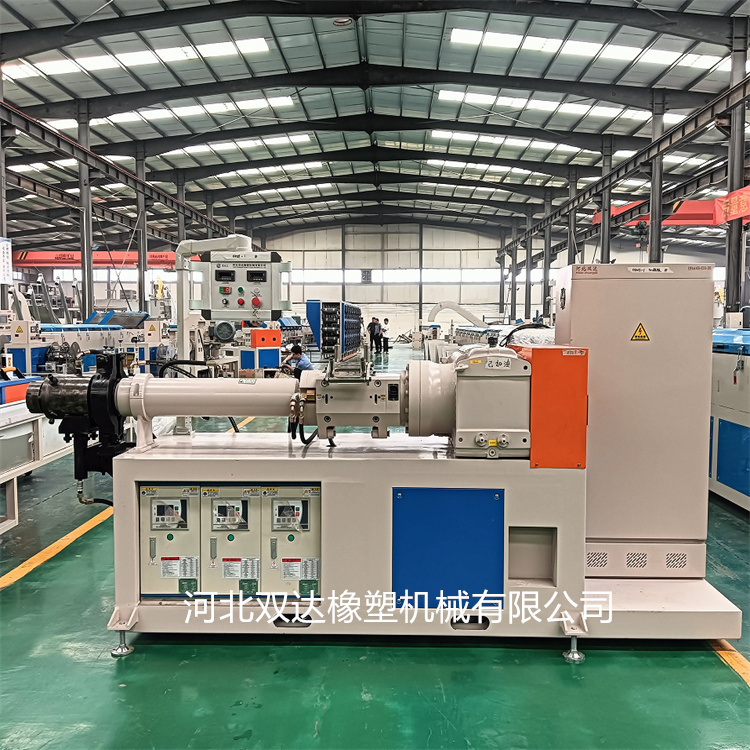
The operating principle of rubber hoses is primarily based on their elastic deformation capability and sealing‑conduction characteristics. By coordinating their internal structure with the external environment, they can convey, isolate, or protect fluids (liquids or gases) and solid particles. Specifically, this functionality can be categorized into the following key aspects:
1. Fundamentals of Fluid Transport
The rubber hose features a hollow internal passage, with both ends typically connected to equipment interfaces such as flanges or fittings. When a pressure differential exists within the hose—e.g., one end is pressurized while the other remains at atmospheric or low pressure—the fluid (liquid or gas) flows along the passage from the high-pressure end toward the low-pressure end. The flexibility of rubber enables the hose to bend and deform within certain limits, accommodating various installation routes, while its smooth inner surface helps minimize flow resistance.
2. Sealing and Leak-Proofing Mechanism
Rubber materials exhibit excellent elasticity; when connected to fittings or equipment, they deform under compression, conforming tightly to the interface surface, filling microscopic gaps and creating a seal that prevents fluid leakage. Some rubber hoses—such as high-pressure hoses—are equipped with reinforcing layers, like steel wire braids, which both enhance pressure resistance and help maintain the stability of the sealing structure.
3. Adaptation to the Environment and Protective Functions
Rubber itself possesses properties such as wear resistance, chemical resistance, and resistance to both high and low temperatures—depending on the specific type of rubber, for example, nitrile rubber is oil‑resistant, while fluoroelastomer is resistant to acids and alkalis. In operation, rubber hoses not only convey process fluids but also shield the internal medium and external equipment from external factors—such as dust, moisture, and mechanical abrasion—while simultaneously preventing contamination of the conveyed fluid.
In short, rubber hoses leverage their elasticity, sealing capability, and environmental resistance to ensure the safe and flexible conveyance of fluids under pressure differentials, while adapting to a wide range of operating conditions.
Related news
Shuangda

Hebei Shuangda Rubber Machinery Co., Ltd.
Tel:400-0319-386
Landline:+86-319-6017632
Email:shuangdaxiangsu@126.com
Official website:www.shuangdajx.com
Addr:Liyuantun Industrial Zone, Weixian County, Xingtai City, Hebei Province
Copyright © 2022 Hebei Shuangda Rubber Machinery Co., Ltd.