




How is temperature control achieved in a butyl rubber extruder?
Time:
2025-07-16
Temperature control in a butyl rubber extruder is critical to ensuring the quality of plasticization. Given its high viscosity and sensitivity to temperature—prone to thermal degradation at excessive temperatures or inadequate plasticization at insufficient ones—it must be precisely managed through a multi‑stage temperature control system.
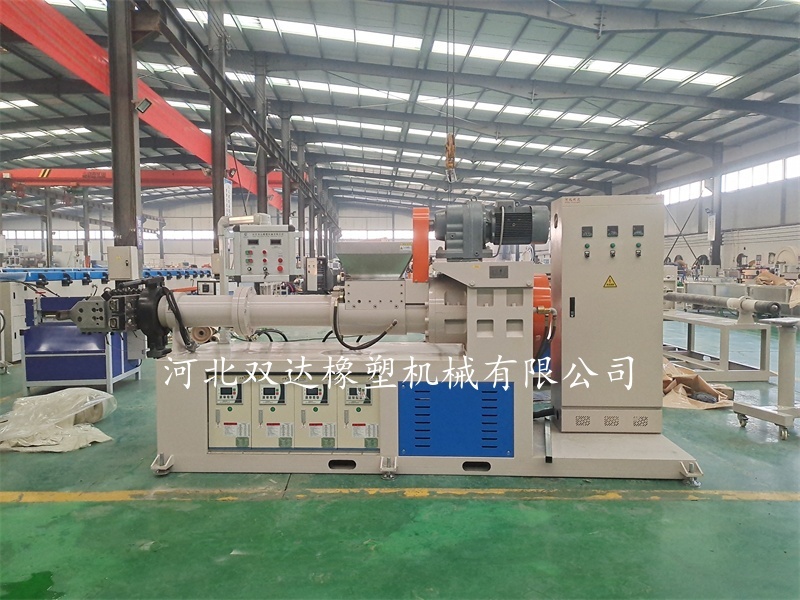
Temperature control in a butyl rubber extruder is critical to ensuring the quality of plasticization. Given its high viscosity and sensitivity to temperature—prone to thermal degradation at excessive temperatures or inadequate plasticization at insufficient ones—it must be precisely managed through a multi‑stage temperature control system, as follows:
I. Segmented Temperature Control Design
The barrel and screw are divided into multiple temperature-control zones according to process requirements—such as the feeding zone, compression zone, homogenization zone, and die head zone—with each zone independently controlled for temperature.
- Feeding section: The temperature is relatively low (typically 80–120°C) to prevent the raw material from softening and sticking prematurely, ensuring smooth feeding.
- Compression and homogenization zones: The temperature is gradually increased (120–180°C) to facilitate rubber melting and plasticization, as well as the uniform dispersion of additives.
- Die head and mold: Maintain a temperature slightly lower than that of the homogenization section (to prevent premature curing or degradation of the compound within the mold), ensuring stable molding.
II. Core Control Components
- Heating system: Typically employs electric heating coils (wrapped around the outer wall of the barrel) or electromagnetic heating, enabling rapid temperature rise and a stable heat source; in certain high‑temperature zones, thermal oil heating is used to prevent localized overheating.
- Cooling system: When the temperature in a specific section exceeds the set threshold, cooling is achieved via a water‑cooled jacket (with internal cooling channels in the barrel) or an air‑cooling unit to prevent degradation of the rubber compound.
- Temperature sensors: High-precision sensors (e.g., PT100 platinum resistance thermometers) are installed at each section to monitor temperature in real time and transmit the data to the control system, with an accuracy of up to ±1°C.
- Control System: The system receives sensor signals via a PLC or an intelligent temperature controller and automatically adjusts the operating status of the heating/cooling units to maintain a constant temperature.
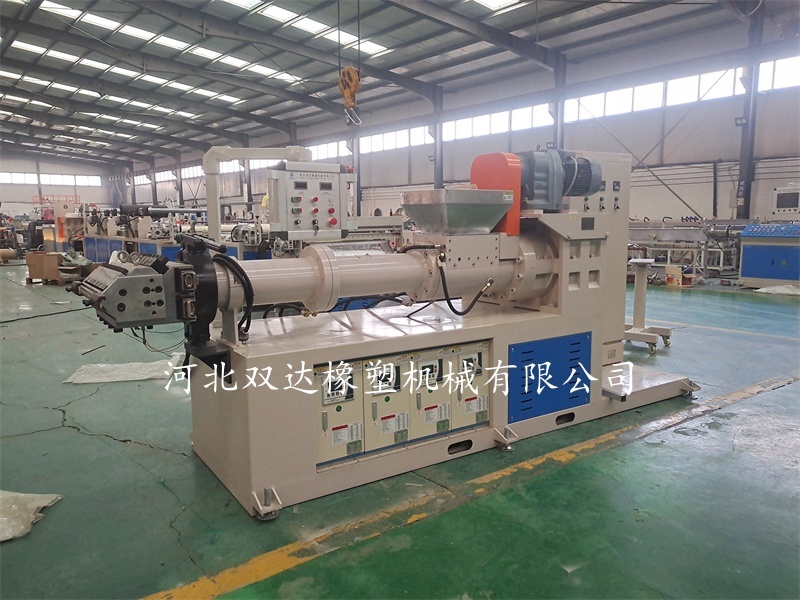
III. Key Control Logic
- Real-time feedback control: Sensors continuously monitor the temperature at each section; if the temperature deviates from the setpoint, the control system immediately adjusts the heating power—by reducing or increasing the current—or activates cooling to maintain the temperature within the process‑specified range.
- Interlocked control: Temperature is dynamically coordinated with screw speed and feed rate. For example, when the screw speed increases (leading to greater shear-generated heat), the heating power is automatically reduced to prevent excessive total heat input; conversely, additional heating is applied to compensate.
By employing a segmented, independent architecture with real-time feedback and multi-component coordination, the butyl rubber extruder can precisely regulate temperatures at each stage, ensuring thorough plasticization while preventing performance degradation due to overheating, thereby delivering a stable material condition for subsequent extrusion molding.
Related news
Shuangda

Hebei Shuangda Rubber Machinery Co., Ltd.
Tel:400-0319-386
Landline:+86-319-6017632
Email:shuangdaxiangsu@126.com
Official website:www.shuangdajx.com
Addr:Liyuantun Industrial Zone, Weixian County, Xingtai City, Hebei Province
Copyright © 2022 Hebei Shuangda Rubber Machinery Co., Ltd.