




Working principle of a plastic pelletizing machine
Time:
2025-06-22
The type and state of the raw material determine the pretreatment method.
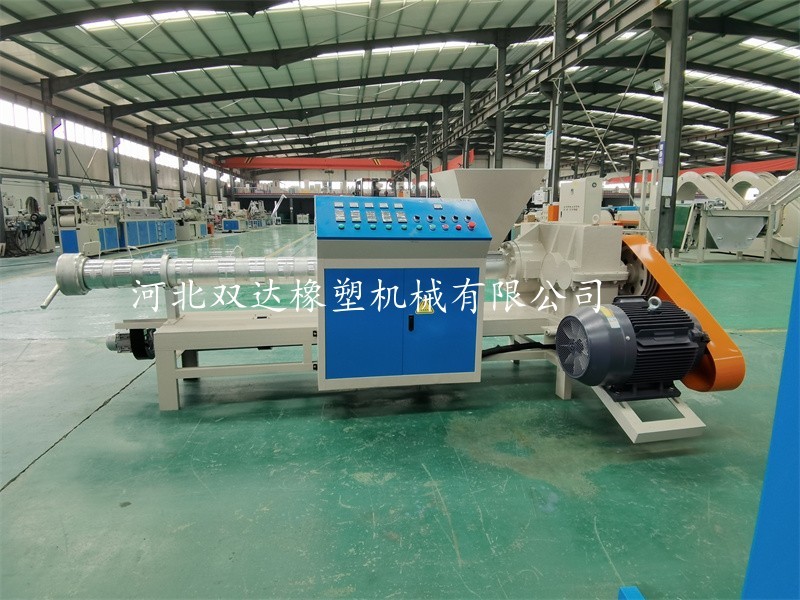
The type and condition of the raw material determine the appropriate pre‑treatment method. For virgin materials, such as polyethylene (PE) and polypropylene (PP) pellets, they can be fed directly into the process; in contrast, recycled waste plastics require a rigorous pre‑treatment sequence. First comes washing: the used plastic products are placed in a washing tank and subjected to physical scrubbing and chemical solvent treatment to remove surface contaminants like dirt, grease, and adhesive labels. Next is crushing: a crusher reduces the washed waste plastics into 3–5 cm-sized fragments, facilitating subsequent melt‑processing. For certain high‑moisture plastics, additional drying is necessary—either through hot‑air circulation or vacuum drying equipment—to eliminate residual water and prevent issues such as bubble formation and degradation during downstream processing.
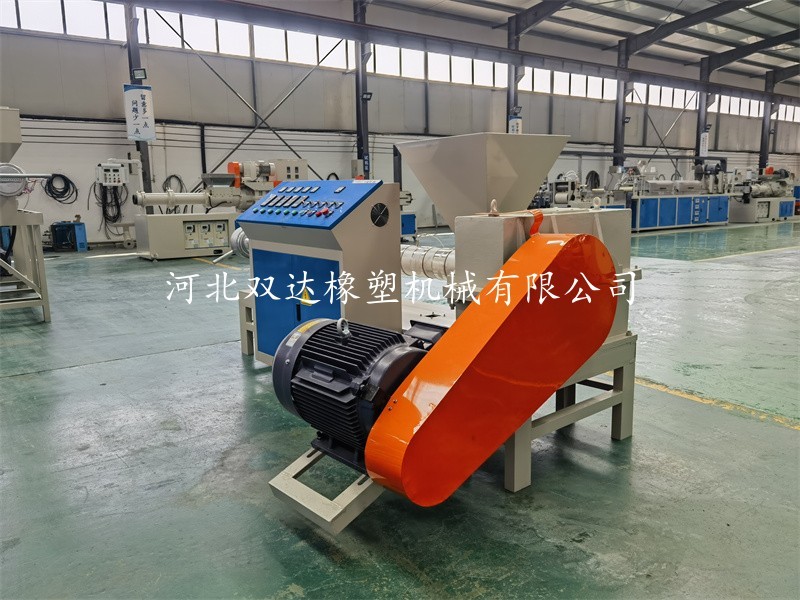
The pre‑processed raw material enters the extruder barrel from the hopper, initiating the critical melting and plasticizing process. The barrel is equipped with external heating—typically electric heating or thermal oil heating—and is divided into multiple temperature zones to accommodate the specific properties of different plastics. For example, when processing polyethylene, the barrel temperature is generally maintained between 160 and 220°C, whereas polyvinyl chloride (PVC) is processed at 160–190°C. Meanwhile, the screw rotates driven by an electric motor; its specialized helical design advances the material forward. As the screw turns, the material undergoes continuous shearing, compression, and friction, which, combined with heat transfer from the barrel’s inner wall, gradually transforms it from solid pellets into a uniform molten fluid. Throughout this process, the screw’s compression section plays a crucial role: by progressively reducing the depth of the flight grooves, it further compacts the material, removes entrapped air, and enhances the homogeneity of the melt.
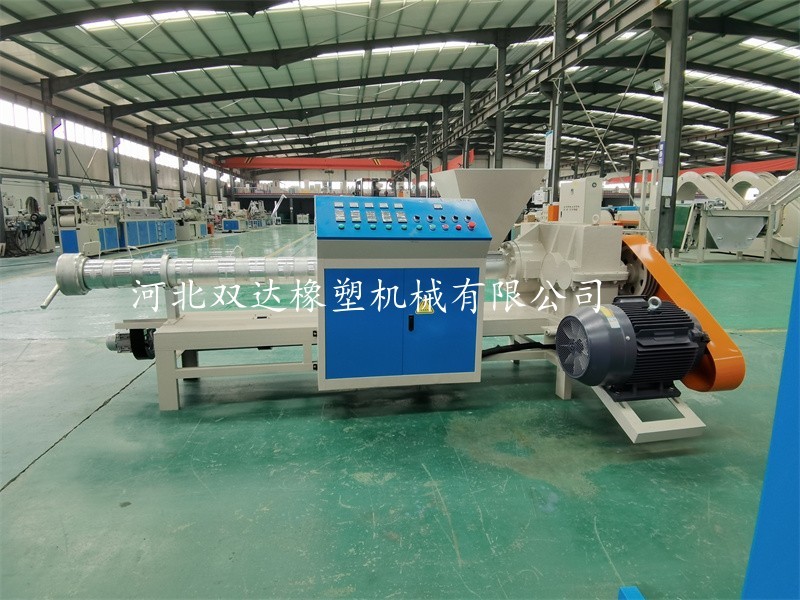
After melting, the plastic melt is continuously pushed by the screw into the filtration unit. The filter screen or screen changer effectively traps impurities, unmelted particles, and metallic contaminants remaining from the recycling process, ensuring the purity of the extruded material. The filtered melt is then extruded through the die; the porous plate or specially shaped channels in the die determine the initial shape of the extrudate. Common extrusion profiles include filamentous and strip‑shaped forms: filamentary extrusion is often used in processes such as underwater pelletizing, while strip‑shaped extrusion is widely employed in air‑cooled pelletizing and similar operations.
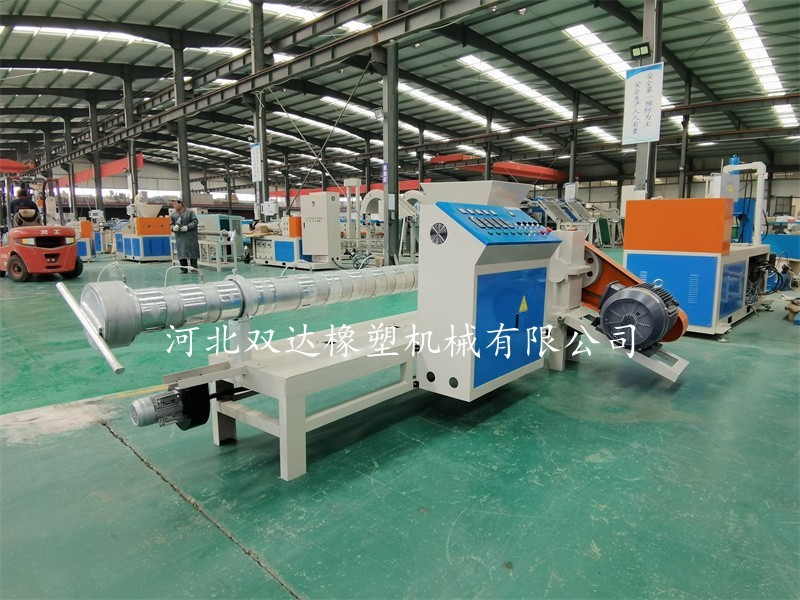
The high‑temperature melt extruded from the die must be rapidly cooled and solidified. Common cooling methods include water cooling and air cooling. In water cooling, the extruded strip‑ or filament‑shaped material is directly fed into a cooling tank, where flowing cooling water quickly reduces its temperature and induces solidification. Air cooling, on the other hand, uses powerful fans or chilled‑air ducts to blow cool air onto the extrudate, allowing it to cool through convective heat transfer. Water cooling is highly efficient and suitable for most plastics, but it may increase the moisture content on the particle surface; air cooling is gentler and is often employed for moisture‑sensitive plastics or products with stringent surface‑quality requirements.
Related news
Shuangda

Hebei Shuangda Rubber Machinery Co., Ltd.
Tel:400-0319-386
Landline:+86-319-6017632
Email:shuangdaxiangsu@126.com
Official website:www.shuangdajx.com
Addr:Liyuantun Industrial Zone, Weixian County, Xingtai City, Hebei Province
Copyright © 2022 Hebei Shuangda Rubber Machinery Co., Ltd.