




How to Choose a Silicone Strip Extruder Manufacturer
Time:
2023-02-15
In the supply-chain‑driven trade industry, selecting a silicone strip extrusion machine manufacturer can enhance a company’s competitiveness. In today’s fast‑paced, unpredictable market, manufacturing firms must closely monitor the maturity of their supply chains and ensure sufficient production capacity. So, let’s explore how to choose the right silicone strip extrusion machine manufacturer. To respond swiftly and efficiently to market demands, it is essential to partner with a reliable silicone strip extrusion machine supplier. Applying the “QCDS” development framework serves as a fundamental guideline for making this choice. Within this framework, the four key elements—Quality, Cost, Delivery, and Service—are equally important and operate in parallel. First and foremost, product quality forms the foundation. Manufacturers should maintain a robust, effective quality assurance system and possess the specialized equipment and expertise required for production. Next comes “Cost and Price.” Companies must conduct rigorous cost analyses for relevant products, ensuring that cost‑saving measures consider not only their own expenses but also those of the supplier, fostering a win‑win outcome. Regarding delivery, suppliers should demonstrate adequate production capacity and have a well‑staffed workforce; above all, achieving mutual benefit remains paramount. For companies to manage their suppliers effectively, they cannot overlook the quality of supplied goods and services.
In a supply-chain‑driven trading environment, selecting a reputable silicone strip extruder manufacturer can enhance a company’s competitive edge. In today’s fast‑paced, unpredictable market, manufacturing firms must closely monitor the maturity of their supply‑chain operations and ensure robust production capacity. So, let’s explore how to choose the right silicone strip extruder manufacturer.
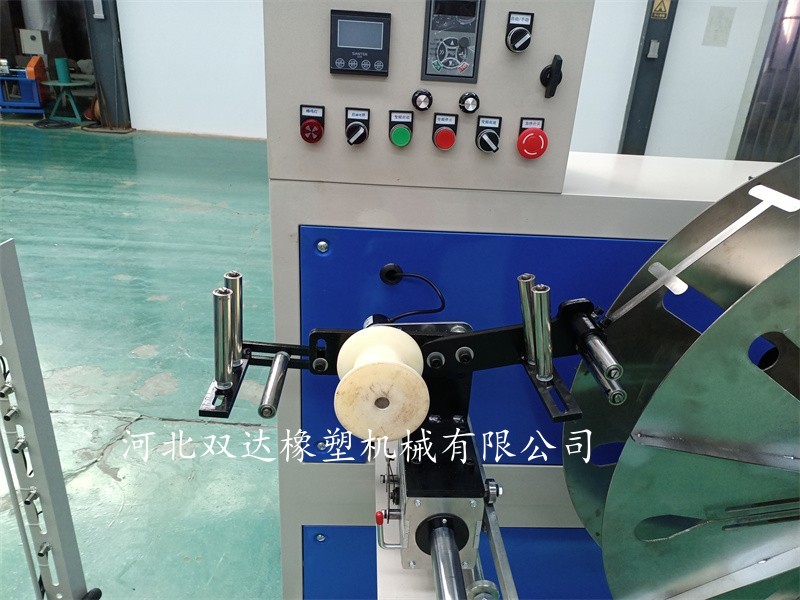
To respond to market demands quickly and efficiently, it is essential to partner with a silicone strip extrusion machine manufacturer. Applying the “QCDS” development framework also serves as a fundamental criterion for selecting a supplier. In this framework, the four letters—Q, C, D, and S—stand for Quality, Cost, Delivery, and Service, each of which holds equal importance and operates in parallel.
First, product quality is fundamental; manufacturers must maintain a stable and effective quality assurance system and possess the specialized equipment and technologies required for production. Second comes “cost and pricing.” Companies should employ rigorous cost‑analysis methodologies for relevant products, ensuring that cost‑saving measures take into account not only their own expenses but also those of suppliers, thereby fostering mutually beneficial outcomes. In terms of delivery, suppliers must have sufficient production capacity and adequate human resources; most importantly, they should strive to achieve win‑win results.
To manage suppliers effectively, companies must neither overlook the cost and quality of supplies and services nor become overly dependent on them. Supplier management is a dynamic process that requires organizations to make timely adjustments in line with their own evolving needs. If you aspire to be a savvy purchaser, the following two approaches may offer valuable insights.
Management of Routine Supplies and Services
In the case of standard products, supply typically exceeds demand, and product and service quality tends to be highly homogeneous. Under these circumstances, companies should prioritize price and convenience when selecting suppliers. Moreover, such suppliers generally warrant a more hands-off management approach. Given the intense competition and wide array of options available, firms may choose two to three key suppliers to foster long-term partnerships. It is also advisable to establish a robust supplier‑淘汰 mechanism to drive continuous improvements in product and service quality.
Managing scarce supplies and service industries
Because products from these manufacturers are highly specialized, the information provided above is often limited. Consequently, when selecting a supplier, companies prioritize whether its technical capabilities meet the required standards. While leaving room for flexibility, they must also evaluate the quality of its services. From a management perspective, such suppliers should be subject to focused oversight, with regular, constructive communication to maintain a strong working relationship. In addition, it is essential to proactively identify backup suppliers to ensure uninterrupted product supply in the event of disputes.
The operational management system of a manufacturing enterprise can be conceptualized as a triangular structure: order planning forms the apex, while production execution and supplier management occupy the two base vertices. Among these, supplier management plays a crucial role in standardizing processes and providing guidance, making its position indispensable. Only when all three elements reinforce one another can the entire triangle be firmly established.
Related news
Shuangda

Hebei Shuangda Rubber Machinery Co., Ltd.
Tel:400-0319-386
Landline:+86-319-6017632
Email:shuangdaxiangsu@126.com
Official website:www.shuangdajx.com
Addr:Liyuantun Industrial Zone, Weixian County, Xingtai City, Hebei Province
Copyright © 2022 Hebei Shuangda Rubber Machinery Co., Ltd.