




What is the operating procedure for a gel filtration machine?
Time:
2023-05-16
In daily life, we often encounter items that are relatively unfamiliar to us—such as a rubber‑filtering machine. Many people may never have heard of it, and you’ve probably run into similar situations. When it comes to the actual operating procedures of a rubber‑filtering machine, there may still be some aspects that aren’t well understood. Below, we’ll take a closer look at the operational guidelines. Safety Operating Procedures for Rubber‑Filtering Machines: 1. Before filtration, the machine head must be preheated to the specified temperature. 2. The motor load must not exceed the rated value (160 amperes). 3. During normal filtration, the temperature of the rubber mixture should not exceed 140°C; in particular, the temperature for chloroprene rubber must remain below 105°C. 4. Burnt rubber mixtures must not be filtered, and the filtered mixture must be free of charred particles. 5. Cold rubber cannot be filtered. If cold rubber needs to be filtered, it must first be softened prior to filtration. 6. Do not introduce metallic or other foreign materials into the rubber filter element. 7. It is strictly forbidden to manually push rubber into the feeder or to remove rubber by hand during operation. Structure and Working Principle of the Rubber‑Filtering Machine: 1. The screw nut is made from a special material—38CrMoAl—with a tensile strength exceeding 550 MPa, and its surface has undergone nitriding treatment. Its hardness is no less than HRC 17. Power is transmitted from the motor through a ZLY180 hard‑toothed gear reducer mounted on the screw shaft end, driving a pair of open gears that rotate the screw. The screw’s rotational speed is fixed and cannot be adjusted. For heating or…
In everyday life, we often encounter items that are relatively unfamiliar to us—such as gel filtration machines. Many people may never have heard of them, and you’ve probably run into situations where you’re not quite sure how to handle such equipment. In this article, we’ll take a closer look at the actual operating procedures for gel filtration machines.
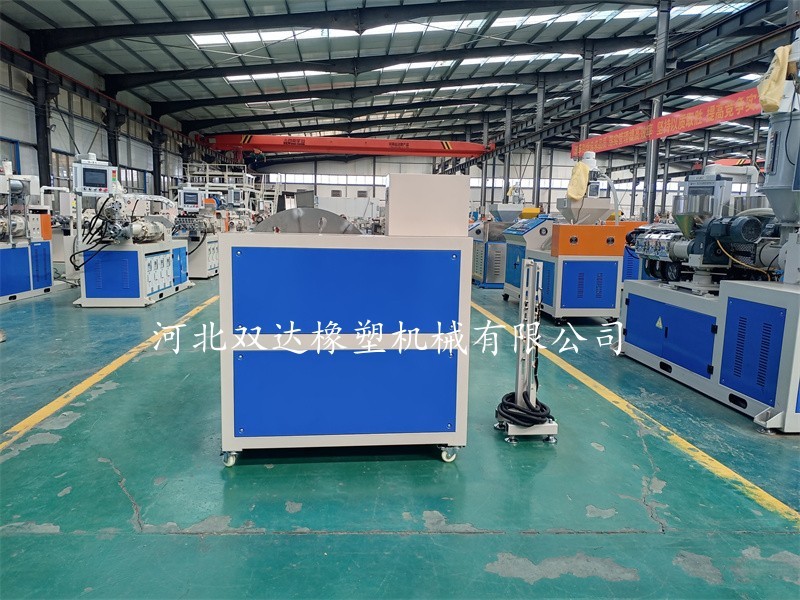
Safety Operating Procedures for the Glue Filtration Machine
1. Prior to filtration, the die body must be preheated to the specified temperature.
2. The motor load must not exceed the specified limit (160 amperes).
3. During normal filtration, the temperature of the filter rubber should not exceed 140°C; in particular, the temperature of chloroprene rubber should not exceed 105°C.
4. The burnt mixed adhesive shall not be filtered, and the filtered mixed adhesive shall be free of burnt particles.
5. Cold glue cannot be filtered. If cold glue needs to be filtered, it must be softened beforehand.
6. Do not place metallic or other foreign objects inside the rubber filter element.
7. It is strictly prohibited to insert glue into the feeder by hand or to remove glue by hand during operation.
Structure and Operating Principle of the Glue Filtration Machine
1. The nut is made of a special material—38CrMoAl—with a tensile strength exceeding 550 MPa, and its surface has undergone nitriding treatment. Its hardness is not less than HRC 17. Power is transmitted from the motor, via a ZLY180 hardened‑gear reducer mounted at the end of the screw shaft, to drive a pair of open‑type gears that rotate the screw; the screw speed is fixed and cannot be adjusted. To regulate the screw’s temperature, it is designed as a hollow shaft, with steam or cooling water introduced indirectly through three‑way fittings, thereby achieving heating or cooling during the production process. Thanks to the 38CrMoAl alloy composition and the nitrided surface, the screw exhibits excellent wear resistance. Operating under extremely high pressures within the machine body, the screw’s axial load is borne by a No. 3426 bearing housed in the thrust bearing housing.
2. The machine body is constructed using a sandwich‑type casting, enabling convenient heating and cooling. The front of the body is fitted with a bushing—replaceable—allowing for replacement as needed based on its wear. A square feed port at the rear of the body permits rubber to enter; driven by the screw’s rotation, the rubber is forced toward the die head, filtered through a screen, and extruded into a continuous strand.
3. The total clearance between the rubber filter screen screw and the bushing is 0.355–0.555 mm, with a minimum clearance of 0.07 mm on one side; otherwise, excessive clearance will impair normal operation, while insufficient clearance will reduce production capacity.
4. The machine head features an interlocking-tooth design and can be opened manually. After a certain period of use or if the filter screen is damaged, the head should be opened to replace the filter. Failure to do so may compromise both the filtration capacity and the quality of the rubber compound.
5. The cooling water for the extruder barrel enters the barrel water tank from the lower part of the machine body, flows over the entire surface of the barrel, and exits from the upper part of the machine, ensuring effective and adequate cooling. The rotary joint, which is screwed to the rear of the machine, has an inlet and an outlet; the straight‑through port serves as the inlet, while the right‑angle port serves as the outlet. When the machine is not in use for an extended period, the cooling water inside the barrel and the screw should be drained.
The above concludes the introduction to the operating procedures for the gel filtration machine. I believe that, through this overview, I have gained a deeper understanding.
Related news
Shuangda

Hebei Shuangda Rubber Machinery Co., Ltd.
Tel:400-0319-386
Landline:+86-319-6017632
Email:shuangdaxiangsu@126.com
Official website:www.shuangdajx.com
Addr:Liyuantun Industrial Zone, Weixian County, Xingtai City, Hebei Province
Copyright © 2022 Hebei Shuangda Rubber Machinery Co., Ltd.