




Main technical features and production capabilities of gel filtration machines
Time:
2023-05-06
In today’s era of rapid technological advancement, rubber filtration machines have found widespread application in many fields. Rubber filters are the primary equipment used to remove impurities from silicone and rubber, with most applications focused on filtering silicone and reclaimed rubber. Common models include the 150‑type, as well as the 200‑ and 250‑type machines. The manufacturing process of rubber filtration machines is essentially the same as that of extruders. Structurally and operationally, they can be classified into hot‑feed rubber extruders. In these machines, silicone rubber is fed into the hopper; a screw mechanism advances the material, generating forward pressure that pushes it toward the extruder die. As the silicone passes through a filter positioned at the die, impurities are effectively removed. The overall design of the 150‑type rubber filter comprises five main components: the die head, thrust assembly, feed system, heating unit, and drive mechanism, along with a rigid frame for mounting auxiliary equipment and components. The extrusion section consists of the machine body, screw, liner, and feed port. Its function is to overcome resistance at the die opening, enabling the mixing, filtration, and extrusion of the rubber compound into semi‑finished products with specific cross‑sectional shapes. The die head serves as both the filtration and shaping component of the extruder, converting the spiral motion of the rubber into linear motion and forming the material into various shaped semi‑finished products. Depending on the type of extruded filter product…
In today’s era of rapid technological advancement, rubber filtration machines have found widespread application across many industries. Rubber filters are the primary equipment used to remove impurities from silicone and rubber, with most applications focused on filtering silicone and reclaimed rubber. Common models include the 150‑type, as well as the 200‑ and 250‑type machines. The manufacturing process of rubber filtration machines is essentially the same as that of extruders. Structurally and operationally, they can be classified as hot‑feed rubber extruders. In a rubber filtration machine, silicone rubber is fed into the hopper; as the screw advances the material, it generates forward pressure, pushing the rubber toward the extruder die. The silicone rubber then passes through a filter positioned at the die, effectively removing impurities.
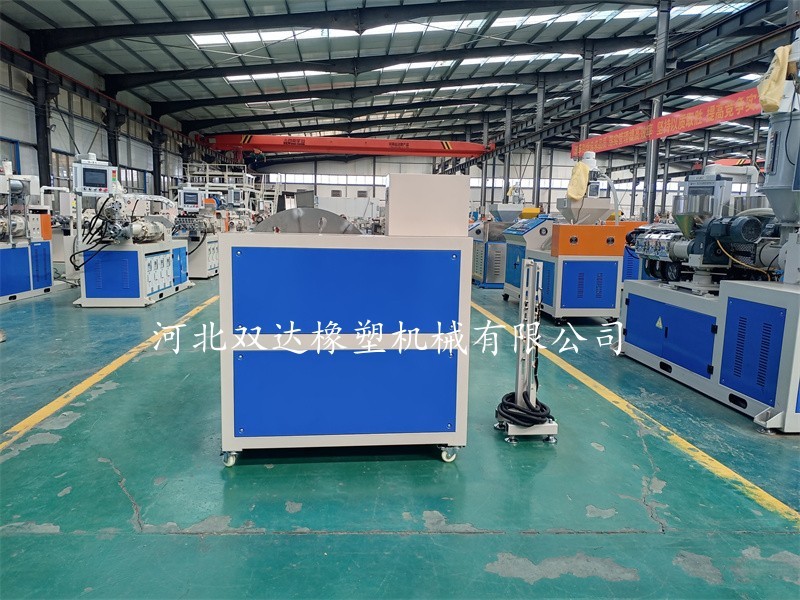
The overall design of the 150 rubber filter screen comprises five main components: the die head, thrust mechanism, feed system, heating unit, and drive assembly. A rigid frame is provided to mount various auxiliary devices and components. The extrusion section consists of the barrel, screw, liner, and feed port. Its function is to overcome the resistance at the die opening, thereby mixing, filtering, and extruding the rubber compound into a semi‑finished product with a specified cross‑sectional shape. The die head serves as the filtration and shaping element of the extruder, converting the spiral motion of the rubber material into linear motion and forming it into semi‑finished products of various shapes. Depending on the specific extruded product, the die head may adopt different structures and configurations. The extruder’s drive system, consisting of an electric motor and a reducer, supplies the power and speed required for screw rotation. The heating and cooling system includes the screw’s central bore, the barrel, and the die head jacket; these components are heated or cooled as needed by the process. The electrical control system, comprising control switchgear and power distribution cabinets, provides the necessary power and ensures the efficient operation of the equipment.
In addition to rubber extrusion filters, the key performance characteristics of silicone gel filtration machines are as follows: after the silicone gel is fed into the machine, the material is continuously pushed toward the die head by the screw’s thrust. At the die head, a critical component is the filter screen, whose mesh count can be adjusted according to the user’s process requirements. Silicone gel filtration machines are easy to operate, capable of continuous operation, offer high filtration efficiency, large processing capacity, and high production output, thereby delivering superior filtration results. Routine maintenance for silicone gel filtration machines includes the following specific tasks: 1) Daily maintenance procedures; 2) Inspect the lubrication condition of the reducer and gear components—lubricant levels must never be allowed to drop; 3) Inspect, analyze, and replace bearings and oil seals; 4) Check and measure the screw’s cylindricity, parallelism, and the friction between the screw and the barrel; 5) Verify that the drive system and electrical and pneumatic components are functioning properly.
Related news
Shuangda

Hebei Shuangda Rubber Machinery Co., Ltd.
Tel:400-0319-386
Landline:+86-319-6017632
Email:shuangdaxiangsu@126.com
Official website:www.shuangdajx.com
Addr:Liyuantun Industrial Zone, Weixian County, Xingtai City, Hebei Province
Copyright © 2022 Hebei Shuangda Rubber Machinery Co., Ltd.